
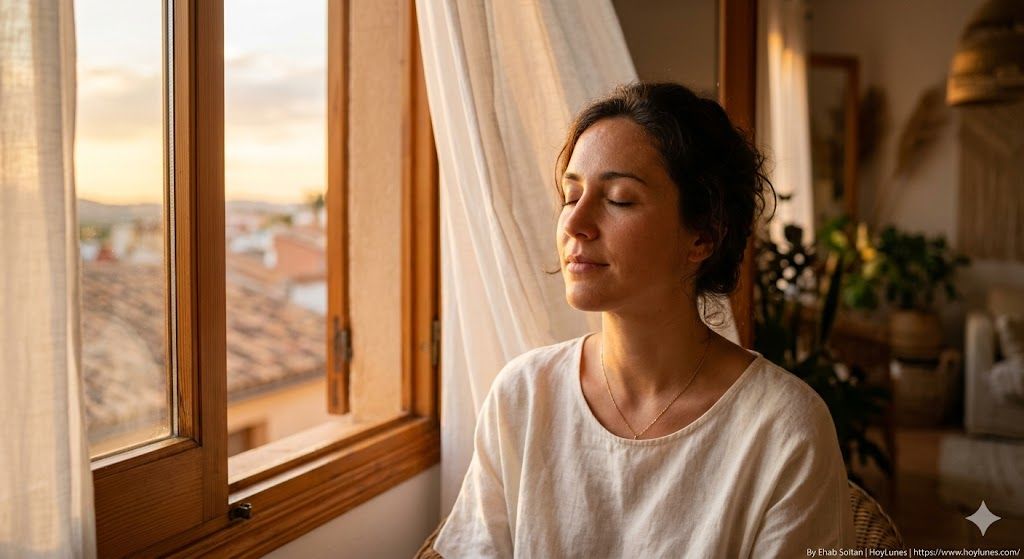
Between the heat and the conditioning, our breath seeks to recover its natural rhythm through awareness and lifestyle.
By Ehab Soltan
HoyLunes – The air in the living room was a physical presence, a heavy guest that refused to leave. Andrea was sprawling on the armchair, observing a bead of condensation sliding down her glass of lemonade. Maribel, conversely, was fiddling with the air conditioning remote, looking at me with a mixture of supplication and reproach.
“Is this a mystical vow or a planned torture?” Maribel let loose. “You told me the technician was coming at four. It is now five, and I feel like my lungs are processing soup, not air”.
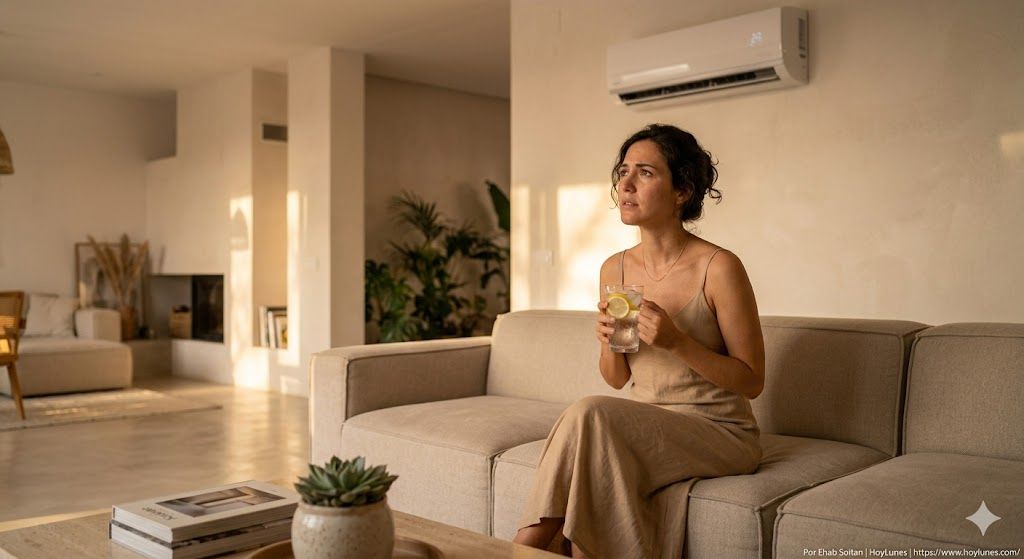
My partner laughed from the coolest corner of the room—the spot where the plants’ shadow seems to offer a reprieve.
“It is not torture. It is that we are waiting for the technician to change the filters. Those are my partner’s strict instructions. He tolerates heat, but he cannot stand having the air conditioning running with last season’s filters”.
“It is not an obsession”, I said, sitting down with them and setting my book aside. “It is that the human lung did not evolve to spend summer breathing artificial air. We have created an ‘indoor summer’ that separates us from the natural cycle. Andrea, you imagine summer as the beach and the sea, but the reality is that many of us spend 14 hours a day breathing recycled air in cold offices, sealed cars, and apartments that seem like thermal bunkers”.
Andrea arched an eyebrow, intrigued. “Is that air truly so different?”
“It is air that goes around and around, time and again. When the units do not have rigorous maintenance, the dirty filters cease to be barriers and become part of the problem. It is not that the air is ‘dead,’ but it loses its humidity. That extreme dryness paralyzes the cilia, the microscopic sweepers of our bronchi. Ultimately, we subject the chest to a roller coaster of thermal changes that exhaust us”.
Andrea sighed, but it was no longer a sigh of complaint.
“You are telling me that the outdoor summer has its challenges, like ozone or smoke from barbecues, but that our indoor refuge also has its small print”.
“Exactly. Summer is a balance. And what we eat also decides how we breathe”.
Andrea took a bite of her mass-produced lemon popsicle and furrowed her brow. “Well, now that you mention it, after this popsicle I feel more tired, and my throat is more… thick”.
“It is logical”, I replied. “That popsicle is basically sugar and coloring. There exists something called diet-induced thermogenesis. Your body is currently burning extra energy to process that fat and that sugar, which raises your internal temperature. It is the paradox: we eat processed ice creams to cool down, but we force our metabolism to light the boiler to digest them. That insulin spike inflames the mucous membranes and thickens the blood, making it harder for the body to cool itself naturally”.
Maribel left the remote on the table, astonished. “So, is there food that actually helps us breathe better?”
“To enjoy the summer, the body needs respiratory ´harmony´. We need foods that do not ‘clog’ us”:
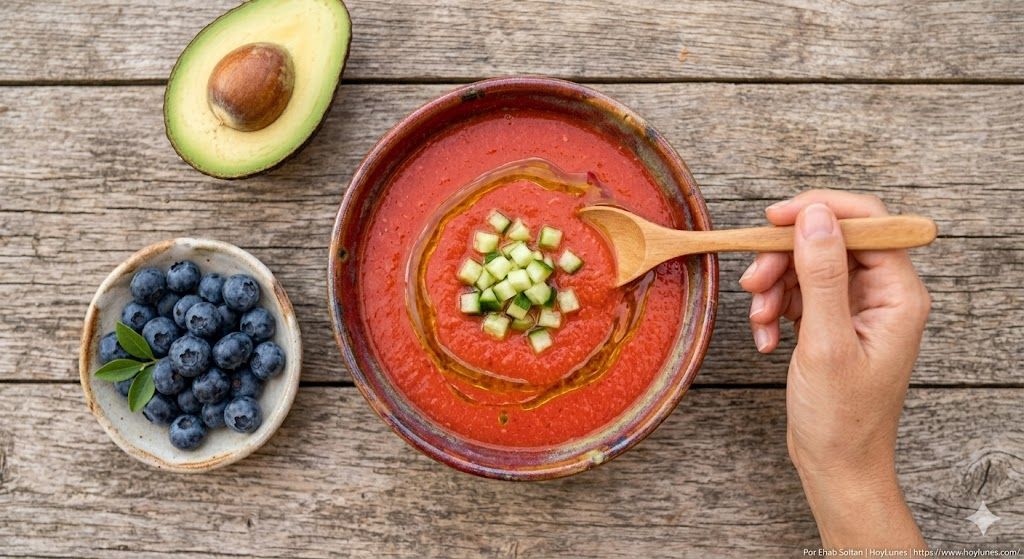
Magnesium and Anthocyanins: Spinach or blueberries help the lung muscles relax and protect them from environmental stress.
Good fats: Avocado helps the alveoli stay open and healthy.
Real hydration: Water alone sometimes falls short; we need the minerals from tomatoes or coconuts to keep our airways elastic.
But it is not just what we eat; it is the ‘atmosphere’ we fabricate for ourselves. In summer, due to a strange obsession with freshness, we saturate the environment with air fresheners, chemical sprays, and repellents that the lung must filter in non-ventilated spaces. It is that aesthetic of smell that sometimes costs us dearly. The same occurs with chlorine in indoor pools: that intense exposure creates irritating by-products that are a challenge for children, asthmatics, or anyone with sensitivity. In the end, we try to protect ourselves from the sun or the smell of being enclosed, but we end up saturating our body’s first line of defense with a chemical soup it did not ask for.
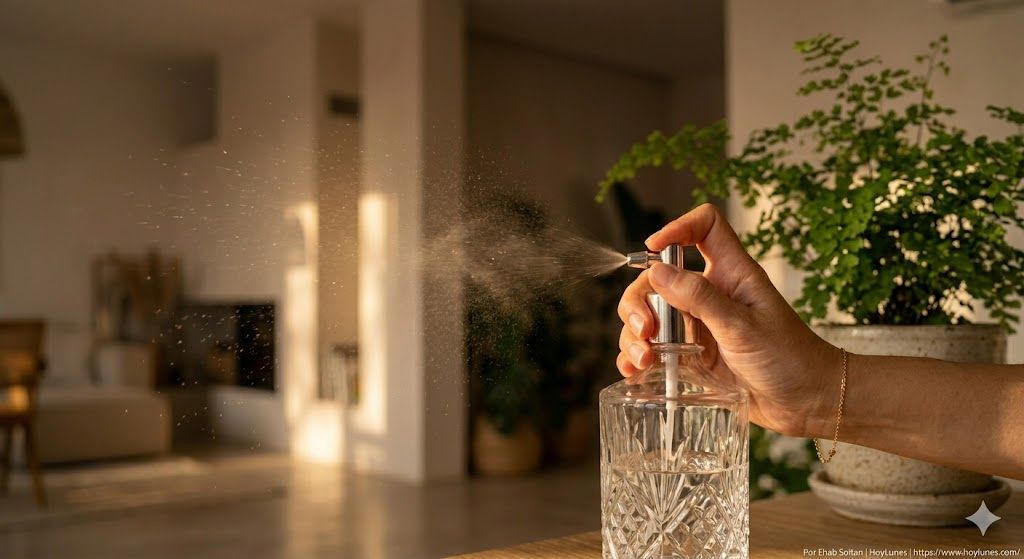
From a medical perspective, what we are experiencing is a perfect storm for our airways. Prolonged exposure to extreme temperatures forces the lungs to work with air that is less dense and richer in photochemical pollutants, which generates low-grade inflammation. If to this we add the habit of remaining in interiors sealed with artificial respiration and a diet loaded with processed products that thicken bronchial mucus, we end up suffering from a chronic respiratory fatigue that many confuse with simple exhaustion from the heat. The problem is systemic: habits like summer sedentary behavior or the overuse of aerosols in non-ventilated spaces exhaust our lungs’ self-cleaning capacity. The solution is not to turn off the air, but to return the body’s defense capacity to it through real cellular hydration, nutrition that does not obstruct, and respect for our spaces’ natural ventilation times.
My partner looked at me with a knowing smile.
“In the end, what he is trying to tell us is that we must not be afraid of the heat, but have awareness. The true relief comes not from a machine, but from a body that does not have to fight against itself”.
At that moment, the doorbell interrupted the chat. It was the technician. Andrea and Maribel looked at each other and smiled. They knew the cold would soon arrive, but something in their way of sitting, more upright and calm, told me they had already begun to value each inspiration. They had understood that the air that truly counts is the one we manufacture ourselves from within.
#PulmonaryHealth #BreathingWell #HealthyLife #ConsciousNutrition #HealthySummer #BodyCare #PureAir #HealthyHabits #HoyLunes #EhabSoltan